

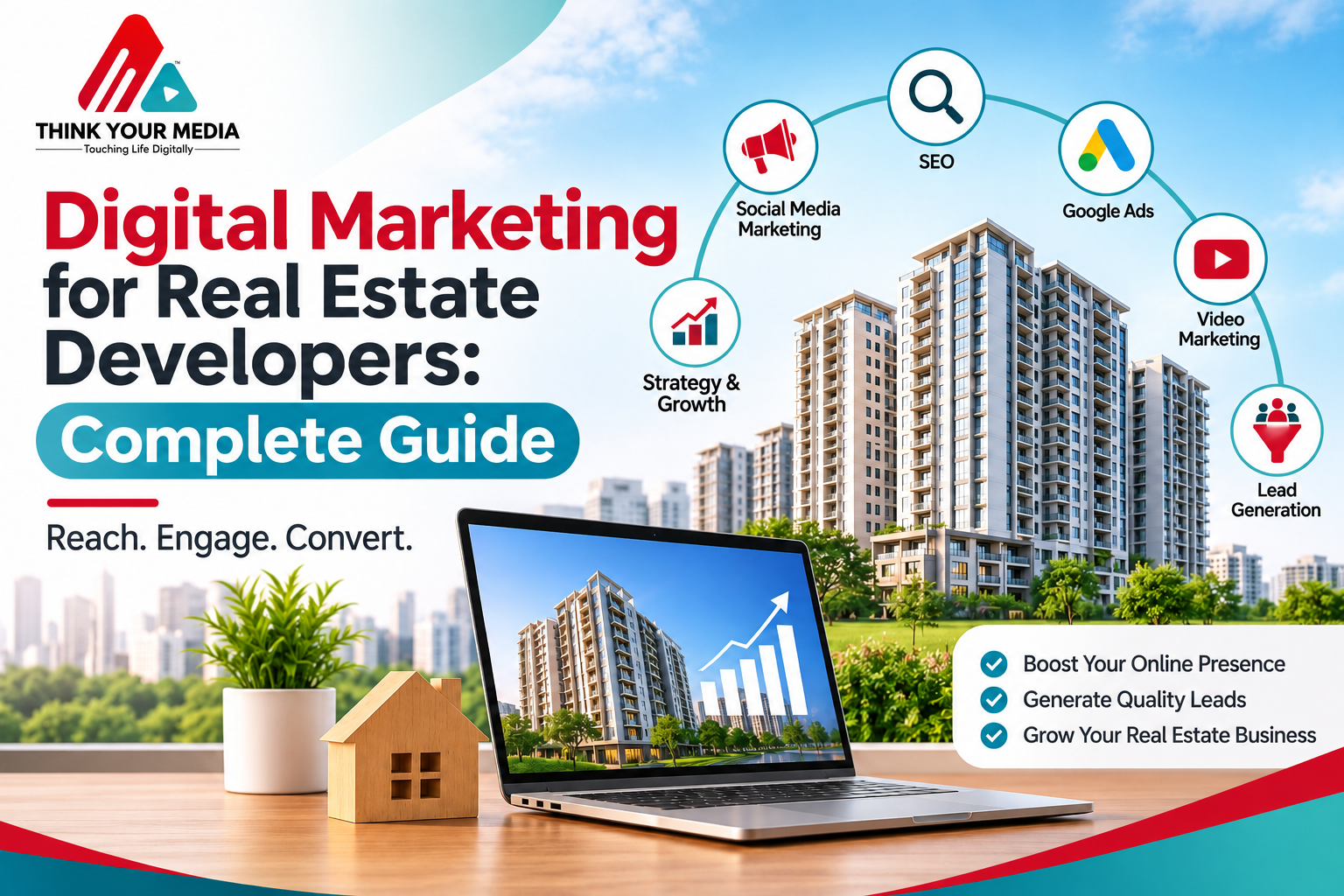
The real estate industry has changed significantly over the last few years. Earlier, property developers depended heavily on newspaper advertisements, hoardings, property exhibitions, and broker networks to attract potential buyers. While these traditional methods still have their place, today’s property buyers begin their search online. They explore project websites, compare locations, watch property videos, read reviews, and check social media before making a purchase decision.
For real estate developers, having a strong digital presence is no longer optional. A well-planned online strategy can help generate qualified enquiries, build brand credibility, promote new projects, and improve sales opportunities. This is where digital marketing services for real estate become important, helping developers reach the right audience at different stages of the property-buying journey.
Looking to generate quality property enquiries and build a strong digital presence for your real estate project? Connect with Think Your Media for result-oriented digital marketing solutions. Visit www.thinkyourmedia.com.
1. Why Is Digital Marketing Important for Real Estate Developers?
Buying a property is a major financial decision. Customers rarely make this decision after seeing just one advertisement. They spend time researching developers, checking project details, comparing prices, and understanding the benefits of different locations.
Digital marketing allows developers to stay visible throughout this decision-making process.
Here are some major advantages:
-
Wider Audience Reach: Promote residential and commercial projects beyond a particular city or locality.
-
Better Lead Generation: Connect with people actively searching for flats, apartments, plots, and commercial spaces.
-
Brand Building: Establish your company as a reliable and recognisable real estate developer.
-
Measurable Performance: Track website visitors, enquiries, campaign costs, and conversions.
-
Direct Customer Engagement: Communicate with potential buyers through social media, email, WhatsApp, and other digital platforms.
-
Retargeting Opportunities: Reconnect with people who previously visited your website or interacted with your advertisements.
Unlike traditional advertising, digital campaigns also allow developers to understand which marketing channels are bringing enquiries and where their advertising budget is being spent.
2. Build a Professional Website for Your Real Estate Projects
Your website is often the first place where a potential buyer learns about your company and its projects. If the website looks outdated, loads slowly, or does not provide essential information, visitors may leave without contacting your sales team.
A professional real estate website should include:
-
Detailed project information and specifications.
-
High-quality property images and videos.
-
Location maps and nearby facilities.
-
Floor plans and available configurations.
-
Pricing information or enquiry options.
-
Construction updates and project status.
-
Developer profile and completed projects.
-
Contact forms and direct WhatsApp integration.
Another important factor is mobile responsiveness. Many buyers explore properties through their smartphones, so your website should provide a smooth experience across different screen sizes.
Developers should also create separate landing pages for individual projects. This makes it easier to run targeted advertising campaigns and direct visitors to relevant project information instead of sending everyone to the homepage.
3. Search Engine Optimisation (SEO) for Real Estate Projects
Imagine someone searching for a 3BHK apartment in Noida or residential plots near Greater Noida. If your project website appears in relevant Google search results, you have an opportunity to attract people who are already interested in buying property.
SEO helps improve your website’s visibility on search engines without paying for every individual click.
A real estate SEO strategy should focus on:
Keyword Research: Identify the search terms potential buyers use, such as apartments in Noida, luxury flats in Greater Noida, residential plots near Delhi NCR, or commercial property investment.
On-Page SEO: Optimise website titles, headings, descriptions, images, URLs, and project content.
Local SEO: Improve your Google Business Profile, location-based pages, and local search visibility.
Content Marketing: Publish useful blogs about property investment, home-buying tips, location advantages, and real estate trends.
Technical SEO: Improve website speed, mobile usability, indexing, website structure, and overall performance.
A specialised real estate digital marketing agency can help developers create an SEO strategy based on their project locations, property categories, and target customers.
However, SEO takes time. Developers should focus on consistent optimisation rather than expecting immediate rankings after publishing a few pages.
4. Google Ads: Reach Buyers Who Are Actively Searching
Google Ads is one of the most useful advertising platforms for real estate developers because it allows businesses to reach people searching for specific property-related services.
For example, a person searching for “luxury apartments in Noida Extension” may already have a strong interest in purchasing a property.
Developers can use different Google Ads formats depending on their campaign objectives:
-
Search Ads: Appear when users search for relevant property-related keywords.
-
Display Ads: Promote projects through visual advertisements across websites and apps.
-
YouTube Ads: Showcase project videos, amenities, construction progress, and location benefits.
-
Remarketing Ads: Reach people who previously visited the website or interacted with advertisements.
For better campaign performance, developers should create separate campaigns for different projects, locations, and property categories.
It is equally important to monitor lead quality. A campaign generating 200 enquiries is not necessarily better than one generating 80 enquiries if the second campaign brings more serious buyers.
5. Social Media Marketing for Real Estate Developers
Social media platforms have become important channels for discovering brands, exploring properties, and building trust.
Platforms like Instagram, Facebook, LinkedIn, and YouTube offer different opportunities for real estate developers.
Here is how developers can use them effectively:
-
Share attractive project photographs and walkthrough reels.
-
Publish short videos highlighting amenities and property features.
-
Post construction updates and project milestones.
-
Share location advantages and nearby facilities.
-
Use Instagram Stories for regular updates and audience engagement.
-
Promote residential and commercial projects through targeted advertisements.
-
Share project launches, offers, and upcoming events.
-
Run lead generation campaigns.
-
Retarget people who have previously interacted with the brand.
-
Build the developer’s corporate identity.
-
Share company achievements and project announcements.
-
Connect with investors, channel partners, and industry professionals.
-
Publish insights about real estate development and market trends.
YouTube
-
Upload detailed property walkthroughs.
-
Create project introduction videos.
-
Share customer testimonials.
-
Publish interviews with architects and project experts.
-
Showcase construction progress through regular updates.
The key is to avoid treating every social media platform in the same way. Each platform has a different audience and content consumption pattern.
6. Video Marketing: Give Buyers a Better Property Experience
Property buyers want to understand what they are investing in before scheduling a site visit. Photographs are useful, but videos can communicate the actual project experience much more effectively.
Real estate developers can create several types of video content:
-
360-degree property walkthroughs.
-
Sample flat and apartment tours.
-
Drone footage of the project and surrounding area.
-
Construction progress videos.
-
Interviews with architects and project managers.
-
Customer testimonials.
-
Videos highlighting amenities and connectivity.
For under-construction projects, regular video updates can also help maintain buyer interest and demonstrate development progress.
Short-form videos are particularly useful for Instagram Reels, Facebook Reels, and YouTube Shorts. Longer videos can be used on YouTube and project landing pages.
A consistent video strategy makes it easier for buyers to understand the project and gives developers more content to use across their marketing channels.
7. Lead Generation: Focus on Quality, Not Just Quantity
Lead generation is one of the biggest priorities for real estate developers. However, receiving a large number of enquiries does not automatically mean better sales.
The objective should be to attract people who match the project’s budget, location, property requirements, and purchase timeline.
A practical lead generation strategy includes:
Dedicated Landing Pages: Create separate pages for different projects with relevant information and enquiry forms.
Facebook and Instagram Lead Ads: Collect customer details directly through social media advertisements.
Google Search Campaigns: Reach users actively looking for specific property options.
WhatsApp Integration: Make it easy for potential buyers to connect with the sales team.
Retargeting Campaigns: Reconnect with visitors who showed interest but did not submit an enquiry.
Lead Qualification: Ask relevant questions about budget, property type, preferred location, and buying timeline.
A digital marketing company for real estate in Noida can help developers plan campaigns around their project locations, target audiences, and lead generation objectives.
Developers should also maintain a proper lead management system. Every enquiry should be assigned to a sales representative, followed up on time, and tracked until its final status is known.
8. Influencer Marketing for Real Estate Projects
Influencer marketing is becoming an interesting option for real estate developers, especially when promoting new projects and emerging locations.
Local influencers, property content creators, lifestyle bloggers, and home décor creators can help introduce projects to their existing audiences.
Some effective influencer marketing ideas include:
-
Inviting local influencers for a project visit.
-
Creating property walkthrough videos.
-
Highlighting nearby markets, schools, hospitals, and transport facilities.
-
Sharing videos about the lifestyle offered by the project.
-
Collaborating with real estate content creators for informative videos.
The selection of influencers matters more than their follower count. Developers should look for creators whose audience matches their target customer profile.
Influencer collaborations should also focus on genuine project information rather than exaggerated promises or unrealistic claims.
9. Online Reputation Management (ORM)
Trust plays a major role in property purchases. Before investing their savings, buyers often search for information about the developer, previous projects, customer experiences, and online reviews.
Negative reviews, unanswered complaints, or inconsistent brand information can affect a developer’s reputation.
Online Reputation Management helps businesses monitor and improve their online image.
Important ORM activities include:
-
Monitoring Google reviews and social media comments.
-
Responding professionally to customer complaints.
-
Encouraging genuine customer feedback.
-
Publishing project achievements and company updates.
-
Maintaining consistent business information across online platforms.
-
Addressing customer concerns through appropriate communication channels.
For developers with multiple ongoing projects, reputation management should be an ongoing activity rather than something handled only when negative feedback appears.
10. WhatsApp and Email Marketing for Customer Follow-Ups
Not every potential buyer will make a decision immediately after submitting an enquiry. Some may be comparing projects, arranging finances, discussing options with family members, or waiting for the right time to invest.
This is why follow-up communication is important.
WhatsApp and email marketing can help developers maintain communication with interested buyers.
Some useful communication ideas include:
-
Sharing detailed project brochures.
-
Sending floor plans and pricing information.
-
Informing buyers about site visit schedules.
-
Sharing construction progress updates.
-
Announcing new project launches.
-
Sending invitations to property exhibitions and launch events.
However, communication should be relevant and sent with appropriate customer consent. Repeated promotional messages can irritate potential buyers and negatively affect brand perception.
11. How to Choose the Right Digital Marketing Partner?
Managing multiple marketing activities requires planning, technical knowledge, creative execution, and regular performance analysis. Many developers prefer working with an experienced marketing partner instead of managing every activity internally.
Before selecting an agency, consider these factors:
Real Estate Industry Experience: Check whether the agency understands property marketing, buyer behaviour, and location-based campaigns.
Lead Generation Expertise: Ask about its approach to generating relevant enquiries rather than simply increasing lead numbers.
SEO and Paid Advertising Knowledge: Your marketing partner should understand both long-term organic growth and paid advertising.
Creative Capabilities: Property marketing requires good-quality designs, videos, landing pages, and advertising creatives.
Reporting and Transparency: The agency should provide regular reports covering advertising expenditure, leads, campaign performance, and important observations.
Understanding of Your Project: Every property project is different. A luxury apartment project requires a different strategy from an affordable housing development or commercial property project.
For developers operating in the Delhi NCR market, choosing a digital marketing company for real estate in Noida with an understanding of local audiences and property markets can help create more relevant marketing campaigns.
12. Common Digital Marketing Mistakes Real Estate Developers Should Avoid
Even with a good marketing budget, certain mistakes can reduce campaign performance and waste advertising expenditure.
Here are some common problems developers should avoid:
-
Targeting Everyone: Promoting a luxury project to audiences that cannot afford it leads to irrelevant enquiries.
-
Ignoring Website Experience: Slow websites and complicated enquiry forms can discourage potential buyers.
-
Using Generic Creatives: Property advertisements should highlight actual project benefits rather than relying on repetitive promotional messages.
-
Not Following Up on Leads: Delayed responses can result in potential buyers choosing another project.
-
Ignoring Organic Marketing: Depending entirely on paid advertising makes it difficult to build long-term online visibility.
-
Not Tracking Conversions: Measuring only clicks and impressions does not reveal the actual business impact.
-
Making Unrealistic Claims: Misleading advertisements can damage credibility and create compliance issues.
A balanced marketing strategy should combine visibility, customer engagement, lead generation, and consistent follow-ups.
13. How to Create a Digital Marketing Strategy for Your Real Estate Project?
A successful marketing campaign begins with a clear plan. Instead of running advertisements randomly, developers should create a strategy based on their business objectives and project requirements.
Here is a simple framework:
| Stage | Marketing Activities | Objective |
|---|---|---|
| Research | Market analysis and audience identification | Understand potential buyers |
| Brand Building | Social media and content marketing | Increase awareness |
| Visibility | SEO and Google Ads | Reach interested audiences |
| Lead Generation | Meta Ads and landing pages | Generate enquiries |
| Engagement | WhatsApp, email and retargeting | Maintain buyer interest |
| Conversion | Sales follow-ups and site visits | Improve sales opportunities |
The budget should also be divided according to campaign objectives, project stage, target location, and previous performance.
For example, a newly launched project may require more awareness campaigns initially, while an established project may benefit from search advertising, retargeting, and conversion-focused campaigns.
Want to build a marketing strategy that brings your real estate project in front of the right buyers? Think Your Media can help with SEO, Google Ads, social media marketing, performance marketing, video marketing, and lead generation. Visit www.thinkyourmedia.com to explore our services.
Conclusion
Digital marketing has become an essential part of real estate development. From building brand awareness and improving search visibility to generating qualified enquiries and maintaining customer relationships, every digital channel contributes to the overall buying journey.
However, successful real estate marketing is not about being present on every platform or spending more money on advertisements. It is about understanding the target audience, communicating the right project information, choosing suitable marketing channels, and consistently measuring results.
Developers who invest in a well-planned digital strategy can build stronger brand recognition, connect with potential buyers, and create better opportunities for business growth in an increasingly competitive property market.