

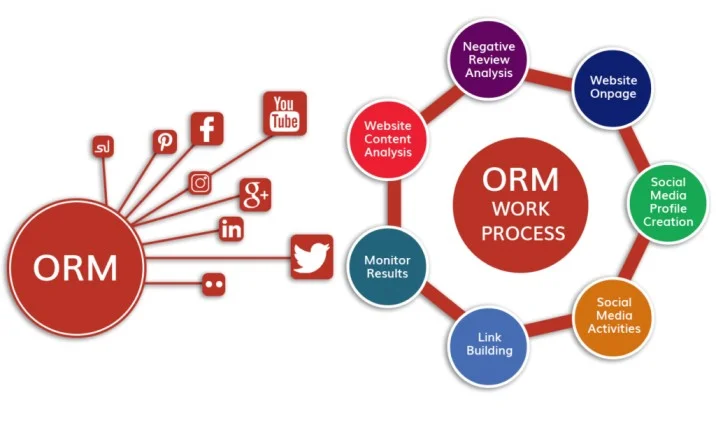
Reputation is a brand’s visibility that online reviews very much determine in this digital age. Customer reviews, whether in the form of a small local business or a big company, can have a great impact on the buying decisions. Negative reviews can be very damaging and even scary while the positives are just the opposite, building trust and credibility. But the brand’s reputation does not necessarily have to go with the negative reviews and how to recover from bad reviews.
The proper Online Reputation Management (ORM) tactic of a company that can accept negative reviews and trust re-establishment, even taking the criticism as a chance to grow comes up with thought-provoking response, internal improvement, and strategic management of online presence as the main factors
Contact Us Now on Whattsapp
What Is Online Reputation Management (ORM)?
Online Reputation Management (ORM) is the term for the procedure of controlling, impacting, and improving the business online perception perception. It involves review management, feedback responses, and creation of good content, and problem solving that affect the public perception of a brand with the help of Think Your Media.
Online Reputation Management (ORM) is a must-have process for any brand or individual to protect and also strengthen their online image in today’s digital world. The major role of ORM services is to control the negative reviews, misleading content, and harmful search results and at the same time, build positive brand perception. Handling the content that is available on social media, Google reviews, blogs, and search engines about the brand through strategic monitoring and management is the core function of ORM. The role of ORM is not limited to merely damage control but it also helps in building trust, increasing customer confidence, and establishing long-term brand credibility which in turn directly impacts business growth.
Online Reputation Management has become a crucial part of digital marketing in today’s competitive online landscape. Every brand or business is judged by its online presence, reviews, and search results, which makes online reputation management essential for building trust and credibility. Professional online reputation management ORM services help businesses monitor brand mentions, manage reviews, and control negative content across search engines and social media platforms. The role of ORM is not limited to handling negative feedback; it also focuses on promoting positive content, improving brand perception, and strengthening customer confidence. With effective online reputation management, businesses can protect their brand image, while online reputation management ORM services ensure consistent growth and visibility. Overall, the role of ORM is vital in maintaining a strong digital identity and creating long-term trust among customers.
ORM is professional death management of negative reviews and, at the same time, a brand image that is strong and trustworthy overall.
Why Bad Reviews Matter More Than You Think
Most of the shoppers check online reviews as a part of their shopping decision process. Research shows time after time that individuals place almost the same value on online reviews as they do on personal recommendations. Just a little negativity in the reviews can:
- Decrease the trust of the customer
- Lower the rates of conversion
- Affect the credibility of the brand
- Lead to loss of potential customers to the competitors
Nonetheless, the customers are aware that no company is perfect. The main point is still how you handle the bad reviews.
Main Reasons for Negative Reviews of Businesses
It is advisable to know the reasons for negative reviews before trying to put them down. Most common reasons are:
- Unsatisfactory customer service
- Late delivery and/or response
- Product/service standards are not up to par
- Miscommunication or unrealized expectations
- Technical or operational issues
Spotting trends in negative comments not only helps companies to address the root cause but also prevents them from being stuck solving surface-level issues.
Step 1: Stay Calm and Don’t React with Emotions.
A bad review can be considered a personal assault, especially when the reviewer is not right and you know it. But the situation will definitely escalate if you act out your feelings or go on the defensive.
By taking the high and professional ground, you will not only prove to be strong and responsible but also show your confidence. Keep in mind that your answer is not only for the reviewer but also for all the future customers who will see it.
Step 2: Respond to Bad Reviews Fast and with Politeness
Letting negative reviews pass without a comment is interpreted as a wrong signal. Customers will think that your business has no interest in what they think.
When you do answer:
- Acknowledge the customer’s concern
- Apologize sincerely if it is appropriate
- Avoid putting the blame on the customer
- Maintain a respectful and professional tone
- A response that is timely and thoughtful is a proof that you care about customer experience.
Step 3: Take the Conversation Offline.Indeed, public replies are necessary, yet detailed discussions should be conducted in private. Invite the reviewer to reach out to you via email or telephone for the resolution of the problem.
This manner of doing things:
- Avoids public conflicts
- Indicates readiness to resolve the issue
- Shows customer-centered approach
- Some customers may even after a resolution update or take down their negative review.
Step 4: Learn From Feedback and Improve Internally
Negative reviews are usually a source of real problem identification. Do not consider them as assaults on your business, rather treat them as constructive criticisms.
Questions to ponder:
- Is it a case of a one-off problem or persistent customer dissatisfaction?
- Do a number of customers highlight the same issue?
- Which process needs enhancement?
Resolving internal issues not only safeguards from future bad reviews but also enhances customer satisfaction across the board.
Step 5: Encourage More Positive Reviews
One of the most powerful ORM methods is increasing the positive reviews count. The impact of a few negative reviews is diminished to a large extent when your overall rating is good.
Ways to get reviews:
- Politely ask the happy customers
- Send emails after purchase as a reminder
- Make it easy for the customers to leave a review
- Encourage the staff to ask for feedback
- Do not buy fake reviews under any circumstances as it can hurt your image and also be against the rules of the platform.
Step 6: Create High-Quality Positive Content
Positive content is helpful in keeping negative reviews down in the search results.
This consists of:
- Blog posts
- Customer testimonials
- Case studies
- Social media content
- Press mentions
Continuous publication of valuable content not only solidifies your brand image but also increases search visibility.
Step 7: Regularly Keep an Eye on Your Online Presence
ORM is not a one-time activity but a continuous process. Therefore, businesses should periodically check:
- Review sites
- Social media mentions
- Search results
- Forums and discussion boards
By this method, incidents of negative feedback can be detected at their earliest and thus responded to quickly and efficiently.
Step 8: Treat Unfair or Fake Reviews as a Challenge
Not all negative reviews are real. Some might be from competitors or trolls.
If you think a review is false:
- Report it as per the platform’s guidelines
- Submit proof if necessary
- React calmly without blaming
- Labeling a review as fake can look defensive so always strive to deal with such situations in a manner that reflects professionalism and non-accusation.
Step 9: Train Your Team on Reputation Management
Employees are key factors in shaping the customer experience. Team training in:
Handling customer complaints in a professional manner.
- Communicating effectively
- Adhering to service standards is a way to minimize the occurrence of negative reviews
Step 10: Use ORM Tools and Analytics
There are numerous tools to monitor reviews, mentions, and sentiment. These instruments give the businesses the following abilities:
Supervise different platforms
- Feedback trends can be studied
- Progress can be measured through data
- Data-oriented ORM tactics are always more effective and long-term.
- Converting Bad Reviews into Opportunities
- Unexpectedly, negative reviews if properly managed can be a plus point for your business. A professional reply can:
- Win over potential customers
- Bring out transparency and depict integrity
- Create customer loyalty
- Make obvious your dedication to the process of improvement
- A lot of customers are more inclined to trust businesses that are open about how they fix problems.
What Not to Do When Handling Bad Reviews
- Avoid common mistakes such as:
- Ignoring negative feedback
- Arguing publicly with customers
- Posting fake positive reviews
- Deleting genuine criticism
- Responding with generic messages
These actions can negatively impact your reputation seriously.
Long-Term ORM Strategy for Business Growth
The successful ORM is not about damage control—it’s about long-term brand building.
The strong ORM strategy includes:
- Consistent customer engagement
- Service and products of high quality
- Communication that is open and honest
- Monitoring and improvement on a regular basis
- Gradually, trust, loyalty, and credibility are built.
How Long Does It Take to Recover From Bad Reviews?
Time taken for recovery depends on:
- Severity of the reviews
- Volume of negative feedback
- Industry competition
- Response strategy
Most businesses, with consistent effort, notice improvement within a few months that is already visible.
Conclusion
Unfortunate reviews are unavoidable, however, they do not have to characterize your company. If you have the proper Online Reputation Management tactics, then your company can get back on track, trust can be rebuilt, and strength can be gained.
Professional responses, feedback learning, positive review stimulation, and a strong online presence will turn negative experiences into long-term success.
In the current digital marketplace, reputation is the most important thing—and handling it efficiently is one of the best business investments a company can make.
“Got Questions or Ready to Grow?
Reach Out to Think Your Media Today!”- CONTACT US